VeridataOps

VeridataOps

Reconcile live infrastructure truth into trusted operational context.

VeridataOps collects evidence from infrastructure, identity, cloud, network, monitoring, and business systems, normalizes it into configuration items and relationships, and gives teams a governed review path before publishing approved data to the destinations they trust.

Source systems Endpoint, identity, cloud, network, monitoring
Governance Preview, review, approve, publish
Connectivity SaaS control plane with private-network connectors

How It Works

From source evidence to governed change.

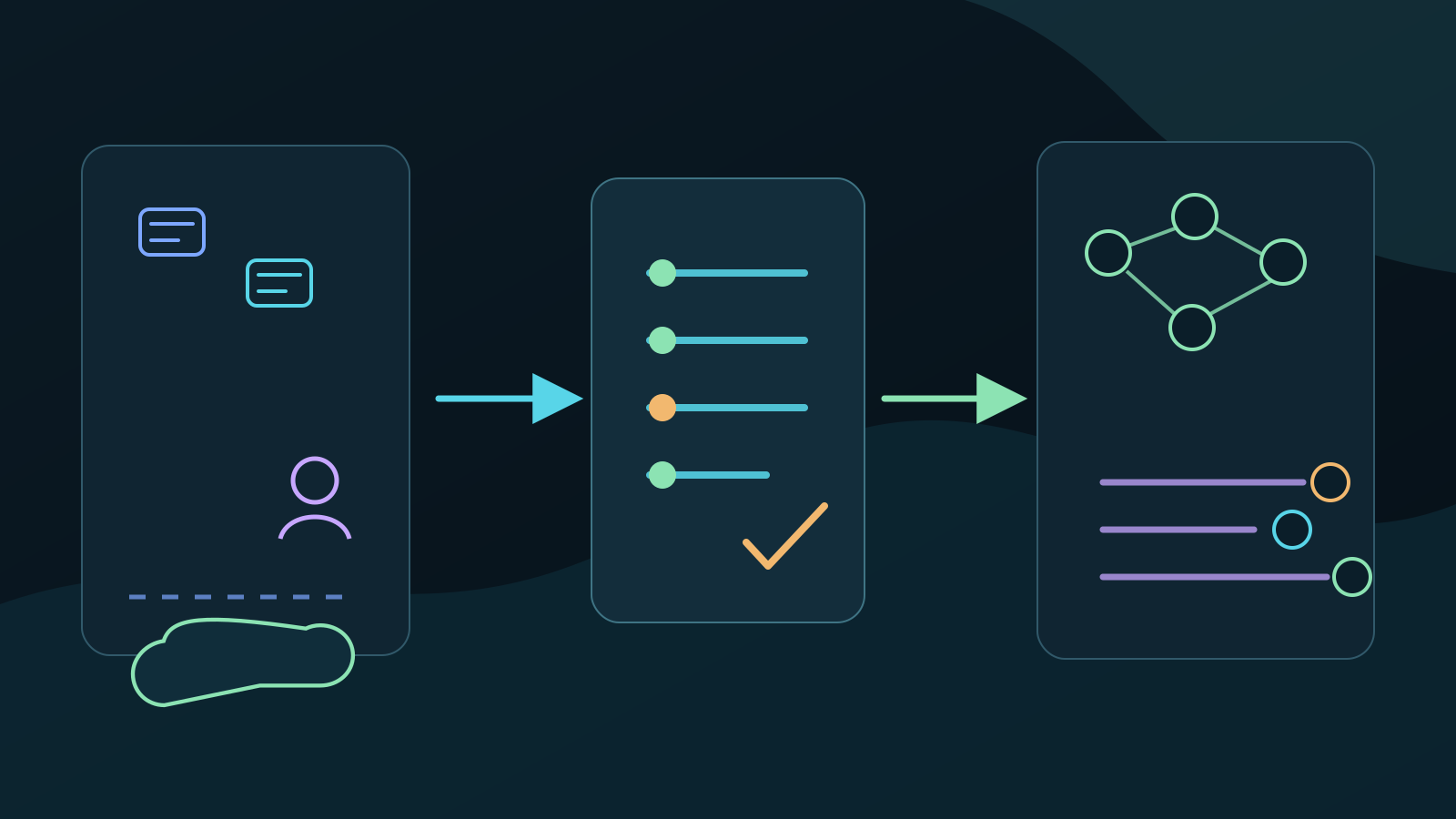
Raw observations, normalized records, relationship paths, review decisions, and destination sync state stay separate. That keeps every change traceable back to the evidence that caused it.

Sources Live truth
Data packs Semantics
Review Diffs + context
Publish Destinations
1 Connect systems

Install data packs for common platforms or deploy outbound connectors where SaaS needs controlled access to private environments.

2 Normalize evidence

Map source fields into CI types, ownership, lifecycle, software, services, dependencies, contracts, and source evidence.

3 Review impact

Preview creates, updates, conflicts, skips, relation changes, and downstream effects before anything is published.

4 Operate continuously

Schedule jobs, track runs, inspect evidence, and manage tenant-safe access, licenses, and credentials.

Data Pack Catalog

Reusable integration knowledge, not one-off scripts.

Data packs package source fields, connection requirements, semantic mappings, icons, and setup guidance so teams can install new integrations without changing the ingestion engine.

Endpoint and identity Microsoft Intune, Intune applications, Entra ID, Active Directory, Jamf, NinjaOne, Okta, Microsoft 365, and ADFS-oriented packs.
Cloud and virtualization AWS, Azure, Google Cloud, VMware, Hyper-V, OpenStack, Nutanix, Kubernetes, OpenShift Virtualization, and Red Hat Virtualization.
Network and discovery Nmap, SNMP walk, IP ranges, Cisco, Meraki, Palo Alto, FortiGate, FortiManager, Infoblox, and Napalm-backed network collection.
Monitoring and operations Zabbix, PRTG, Splunk, Datadog, New Relic, Nagios, ServiceNow, Veeam, WSUS, GitHub, Terraform state, and Ansible inventory sources.

Operational View

See the estate as reviewed evidence, not disconnected records.

Operators can inspect CI summaries, source evidence, dependency paths, unmatched data, and the review history behind each proposed change.

Platform

Built for infrastructure data that needs accountability.

Source ingestion Collect from identity, endpoint, cloud, network, monitoring, and custom API sources using reusable data packs.
Tenant-safe operations Separate customer workspaces, license-gated capabilities, per-tenant configuration records, and SaaS admin controls.
Review before publish Preview creates, updates, conflicts, and dependency impact before data is committed to operational systems.
Native CMDB Explorer Navigate standardized CI templates, additional observed fields, source evidence, and dependency paths.
Destination management Route normalized estate evidence to the native presentation layer or installed destination packs without making any single destination the center of the model.
Private-network connector Run lightweight connectors close to customer infrastructure, poll for work, execute approved jobs locally, and return results without opening inbound firewall access.
Security-minded runtime Use PostgreSQL, Vault-backed secret handling, passkeys, API tokens, audit-friendly call-home licensing, and CI checks.

Security

Designed for sensitive customer infrastructure data.

Infrastructure inventories, source credentials, and dependency maps are valuable. The SaaS runtime separates customer data, stores secrets outside normal configuration records, and supports scheduled jobs through controlled service identities.

Customer network Outbound connector
SaaS control plane Scoped job queue
Secret runtime Vault-backed access
Tenant workspace Reviewed results
Vault-backed secrets Source credentials can be stored in HashiCorp Vault and fetched by the application at job runtime instead of being exposed in tenant settings.
Customer isolation Per-tenant configuration records, scoped sessions, backend authorization, and SaaS admin controls keep customer data separated.
Controlled access Role permissions, passkeys, API tokens, admin IP limits, and audit-friendly workflows reduce unnecessary exposure.
Outbound connector model Connectors enroll with scoped tokens, poll the SaaS control plane, and avoid exposing customer-side services directly to the internet.
Review gates Four-eyes validation, dry-run previews, conflict handling, and destination authority policies prevent accidental writes.

Authentication

Fit customer identity without exposing tenant context.

VeridataOps supports practical sign-in options for SaaS tenants and operators, from local accounts to passkeys and licensed enterprise identity providers. Authentication policy, sessions, and identity checks stay scoped to the active customer workspace.

Local accounts and roles Use built-in users, role-based permissions, API tokens, and profile-managed credentials for smaller teams or break-glass access.
Passkeys Enable WebAuthn/passkey registration and login so users can authenticate with hardware-backed or platform authenticators.
External identity Licensed deployments can use SAML, OIDC, and ADFS-style providers with role mappings and controlled user provisioning.
Scoped sessions Sessions, roles, API tokens, and passkey checks are evaluated against the active customer workspace.

Comparison

Built between discovery, CMDB, and integration tooling.

VeridataOps focuses on evidence capture, normalized CI presentation, dependency context, tenant-safe operations, and reviewed publishing into the tools teams already use.

Capability VeridataOps Typical alternatives
Evidence-first ingestion Traceable through review and CMDB presentation. Usually optimized for final records, telemetry, or data movement.
Reusable data packs Fields, setup guidance, semantic mappings, and install flow. Often adapter, scanner, or connector specific.
Review before publish Preview creates, updates, conflicts, skips, and relationship impact. Approval depth varies or needs custom workflow design.
Tenant-safe SaaS operation Scoped customer workspaces, licensing, admin controls, and isolated runtime settings. Depends heavily on edition, deployment model, or scanner grouping.
Private-network access Outbound connectors can run near customer infrastructure. Usually needs scanners, agents, MID servers, or direct reachability.
Destination flexibility Native CMDB explorer plus licensed destination packs. Usually centered on one platform, exports, or routing primitives.

Open Source And Licensed Features

Start with the core, license the operational scale.

Open core

  • Native CMDB presentation layer
  • Core source ingestion and mapping
  • Preview, review, and commit workflows
  • Destination basics, including NetBox where configured
  • Local development and on-prem deployment

Licensed capabilities

  • Enterprise source and destination packs
  • Connector fleet enrollment and remote job execution
  • Data-pack distribution and import workflows
  • Higher source, job, and tenant scale limits
  • External authentication and SaaS operations
  • Advanced governance, exchange, and support features
For managed service teams Onboard clients without rebuilding ingestion logic.
For platform teams Keep infrastructure data usable, reviewed, and traceable.
For operators Find the source evidence behind every CI and relationship.
Contact info@veridataops.com