Editions
Start in SaaS. Move to dedicated or OEM when the deal demands it.
Use a shared SaaS evaluation path for standard teams. Use dedicated, managed, or OEM options when deployment model, retention, support, security review, or partner embedding needs a scoped agreement.
Use a scoped conversation for dedicated, managed, or OEM requirements without implying self-serve purchase.
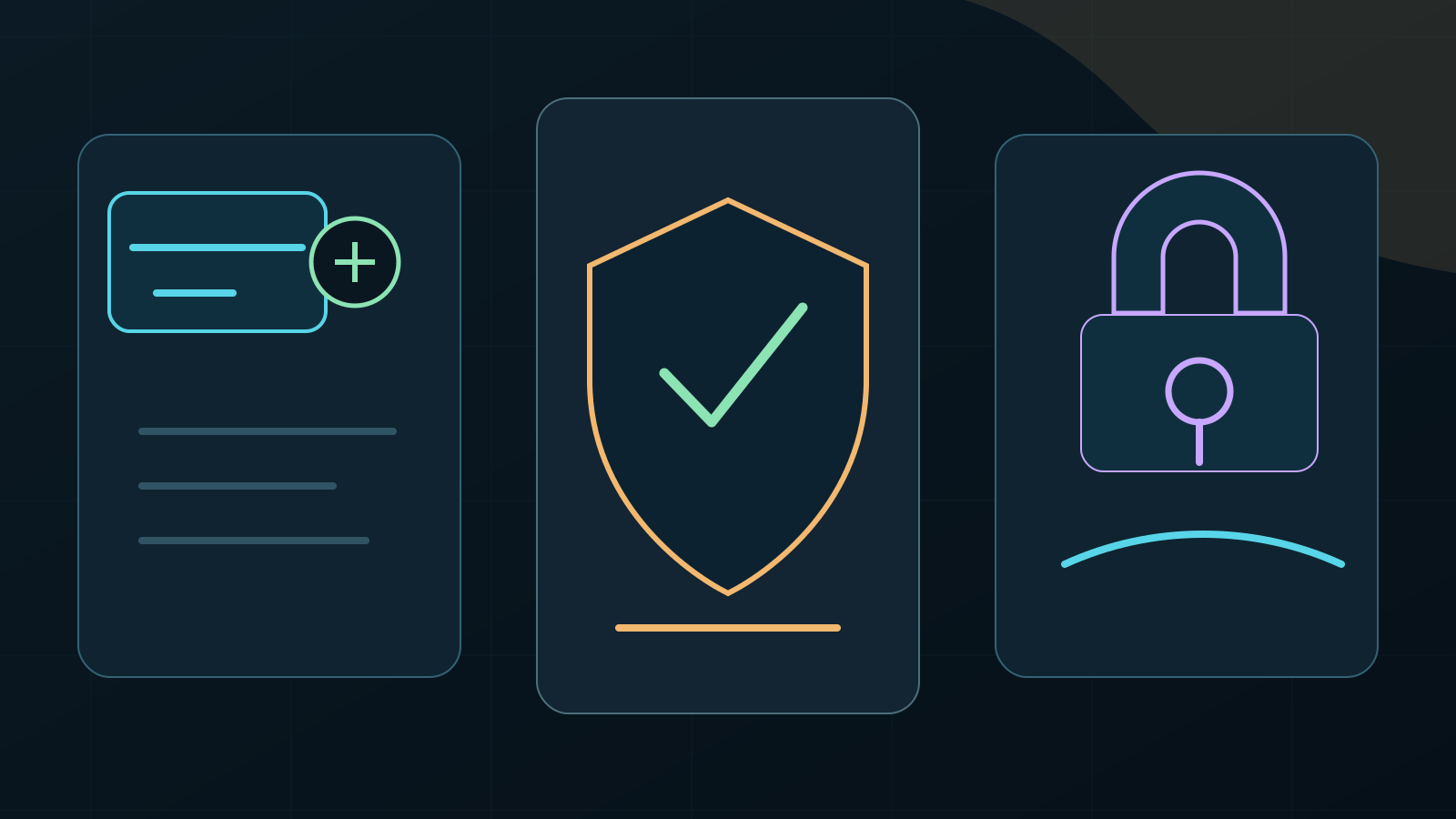
Start
Shared evaluation
Expand
Scoped coverage
Scope
Enterprise
Embed
OEM
Commercial Motion
Choose by buying motion
Shared evaluation keeps the first review path simple. Enterprise and OEM contracts scope deployment model, support, security review, retention, licensed packs, partner rights, and any approval-gated commercial terms. The real buyer decision is whether the first proof can stay inside the shared path or whether customer commitments, security boundaries, or partner delivery already require a tighter operating model.
Buying Paths
Start simple, then match the deployment to the deal
Shared SaaS fits evaluation and standard teams; dedicated, managed, and OEM deployments fit regulated or partner-led motions.
What buyers are really comparing
Evaluate the operating model, not just the SKU.
These comparison points stay inside claim-safe territory: evidence handling, deployment shape, private access, and publication model. They are meant to clarify fit, not to make unsupported performance or market-wide superiority claims.
Approval Checklist
Map the evaluation artifact to the buyer who has to say yes.
This checklist is not a contract checklist. It is the bounded approval path the public site can explain safely: what each stakeholder needs to inspect before the deal can move from shared evaluation into a scoped operating model.
Comparison
A compact view of the operating-model differences.
| Capability | VeridataOps | Common alternatives |
|---|---|---|
| Evidence trail | Source payloads, mappings, and review decisions stay visible. | Often optimized around final records or telemetry. |
| Reusable integrations | Data packs include setup guidance and semantic mappings. | Usually adapter, scanner, or platform specific. |
| Private access | Outbound collectors can run near customer infrastructure. | Often requires scanners, agents, or direct reachability. |
| Publishing model | Current estate cache, Evidence Explorer, and destination packs. | Often centered on one CMDB, exports, or routing flows. |
Platform
Review the operating model
Data Packs
Browse integration categories
Workbench
See builders and explorer
Security
Read the access model
Contact
Send a message