Compliance
Compliance support with evidence, boundaries, and caveats.
VeridataOps is designed to support ISO/IEC 27001, NIST CSF, FIPS-oriented, PCI-sensitive, GxP, ISO 9001, SOC 2, GDPR, DORA, CIS Controls, CSA, OWASP, MITRE, and SLSA/OpenSSF readiness discussions by making product controls, deployment boundaries, retained evidence, and open work items explicit.
Prefer direct contact? Email info@veridataops.com. Include the framework, deployment boundary, and audit blocker; the first reply will route you to the right review path.
Position
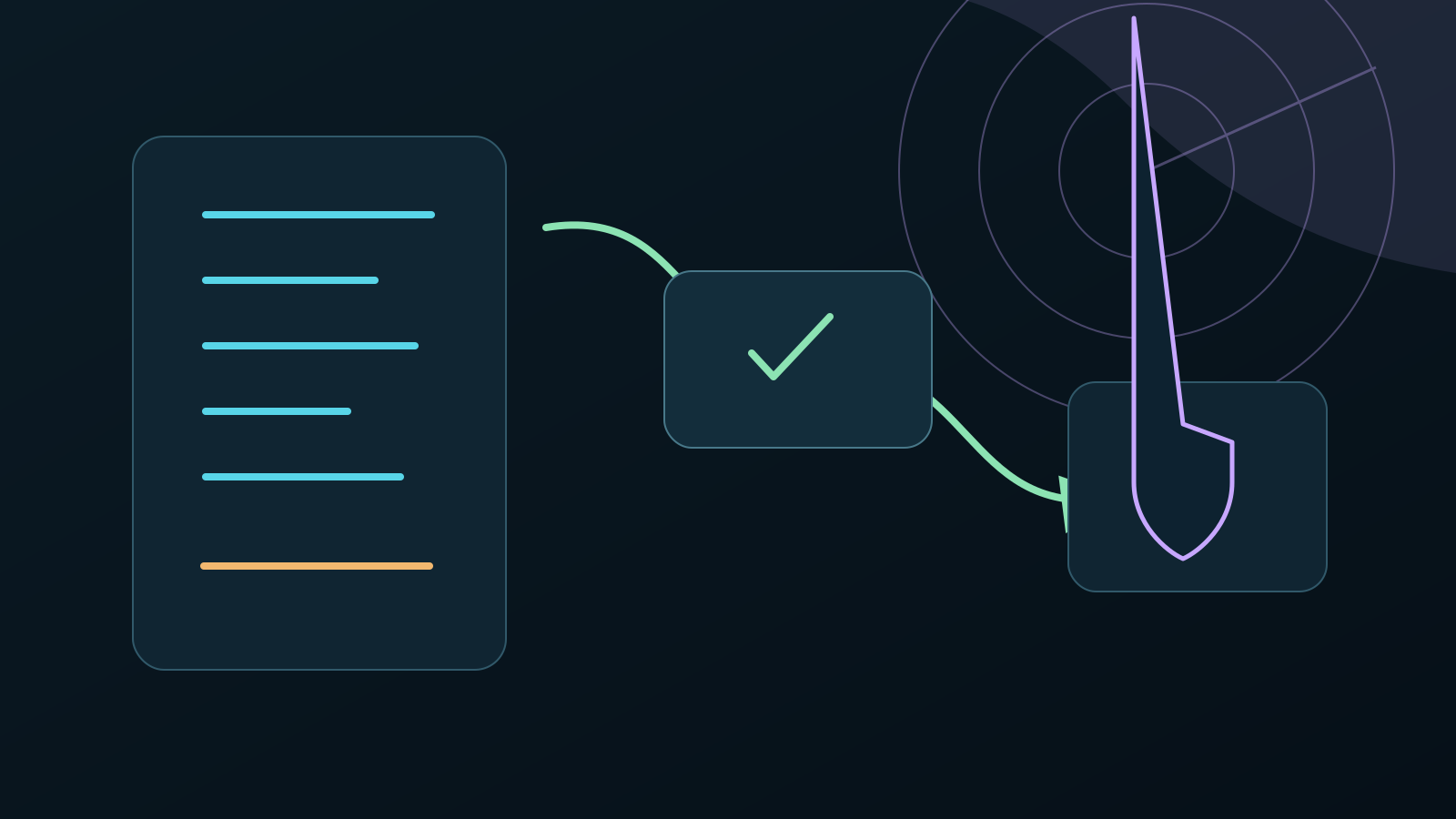
Compliance is achieved by the product plus a configured and evidenced operating scope.
The product can provide strong audit evidence, but certification, validation, or attestation belongs to a specific audited scope. Customer-facing compliance material should separate what is implemented in the product, what must be configured in the deployment, what belongs to company policy, and what remains an open work item.
Framework Support
How VeridataOps maps evidence to review questions.
The same operating evidence can support several frameworks when the audited scope includes the right hosting, cryptographic, process, and customer controls.
| Framework | What reviewers ask for | How VeridataOps supports the answer |
|---|---|---|
| ISO/IEC 27001 | Governed risk, access control, asset context, supplier operation, change management, logging, continuity, and secure development evidence. | Product evidence covers reviewed estate data, RBAC/MFA posture, release evidence, provenance, and audit reports; organization-level ISMS evidence must complete the audited scope. |
| NIST CSF 2.0 | Govern, Identify, Protect, Detect, Respond, and Recover outcomes backed by current asset, dependency, and operational evidence. | Tenant, source, connector, job, review, evidence, and release records support asset identification, protection controls, detection signals, response analysis, and recovery evidence. |
| FIPS-oriented scope | A defined cryptographic boundary, validated modules where required, key lifecycle controls, TLS evidence, and CMVP certificate references. | VeridataOps supports Vault transit and deployment-selected crypto boundaries; FIPS posture remains deployment-specific until the OS, TLS, Vault/KMS/HSM, and modules are selected and evidenced. |
| PCI-sensitive scope | Segmentation, least privilege, secure development, logging, vulnerability management, retention discipline, and proof that cardholder data is not intentionally collected. | VeridataOps supports scoped collectors, tenant controls, review/provenance, and release gates; PCI-sensitive tenant policy, detection/redaction, collector profile, and retention evidence are tracked as caveated work items until complete. |
| GxP and ISO 9001 readiness | Documented quality scope, change control, validation evidence, traceable approvals, supplier controls, CAPA-style follow-up, and electronic record/signature discipline where required. | Work items track GxP/ISO 9001 scope definition, QMS secure-SDLC change control, regulated release packages, supplier inventory, and Part 11-style electronic record and signature controls. |
| SOC 2, CSA, CIS, OWASP, MITRE, and SLSA/OpenSSF | Security control design, cloud assurance mapping, hardened configuration, application security coverage, threat-informed control evidence, and supply-chain provenance. | The roadmap tracks framework mapping plus SAST, authenticated DAST, secret detection, dependency/container evidence, release provenance, security headers, XSS coverage, and customer-safe release evidence bundles. |
| GDPR and DORA | Personal-data lifecycle controls, supplier/subprocessor visibility, retention and deletion discipline, operational resilience, ICT third-party risk, incident evidence, and recovery proof. | Work items track privacy lifecycle controls, supplier and third-party risk inventory, audit export/retention, DORA operational-resilience readiness, and deployment evidence for regulated tenants. |
Claims Control
Compliance language must stay scoped to evidence.
VeridataOps can support readiness, audit evidence, and control reviews, but formal certification, validation, attestation, or compliance claims belong to a named audited scope. Customer-facing reports should use committed estate evidence and explicitly list source limits, confidence semantics, correlation caveats, release version, and open work items.
Control Narrative
The evidence model follows the data lifecycle.
VeridataOps treats source records as evidence, not automatic truth. Collection, review, commit, current estate state, and presentation cache are separated so audit reports can explain what was collected, what was approved, and what became operational context.
Collect
Customer-network collectors call home over outbound HTTPS/WSS/polling for scoped work, with enrollment and revocation records.
Protect
Tenant-aware storage, auth controls, token handling, Vault transit support, and non-default deployment secrets define the product security boundary.
Review
Operators inspect creates, updates, conflicts, skips, and collected evidence before committing selected rows to current estate records.
Report
Audit report templates cover release and supply chain, hosting and infrastructure, tenant/data/collector controls, and open work item caveats.
Customer-Safe Proof Package
What a first evaluation can hand back without exposing customer data.
A serious evaluation should leave the reviewer with bounded evidence they can inspect later. These are the kinds of proof artifacts the public site can describe safely because they are product behaviors, not customer claims or certifications.
Audit Boundary
The answer changes with shared SaaS, Enterprise, OEM, or customer-managed deployments.
Each report should name the environment, tenant or customer scope, product version, component image references, commit SHAs, hosting region, ingress routes, secrets boundary, data stores, retention scope, and evidence generation date.
Security
Review product security controls
Contact
Discuss an audited deployment